What Does a Carpenter Do? Framing, Fit-Out and the Certificate III in Carpentry
Carpenters turn drawings into the timber and lightweight structures that hold a building together, then return to fit it out. This guide explains what the trade involves day to day and how the Certificate III in Carpentry fits around it.
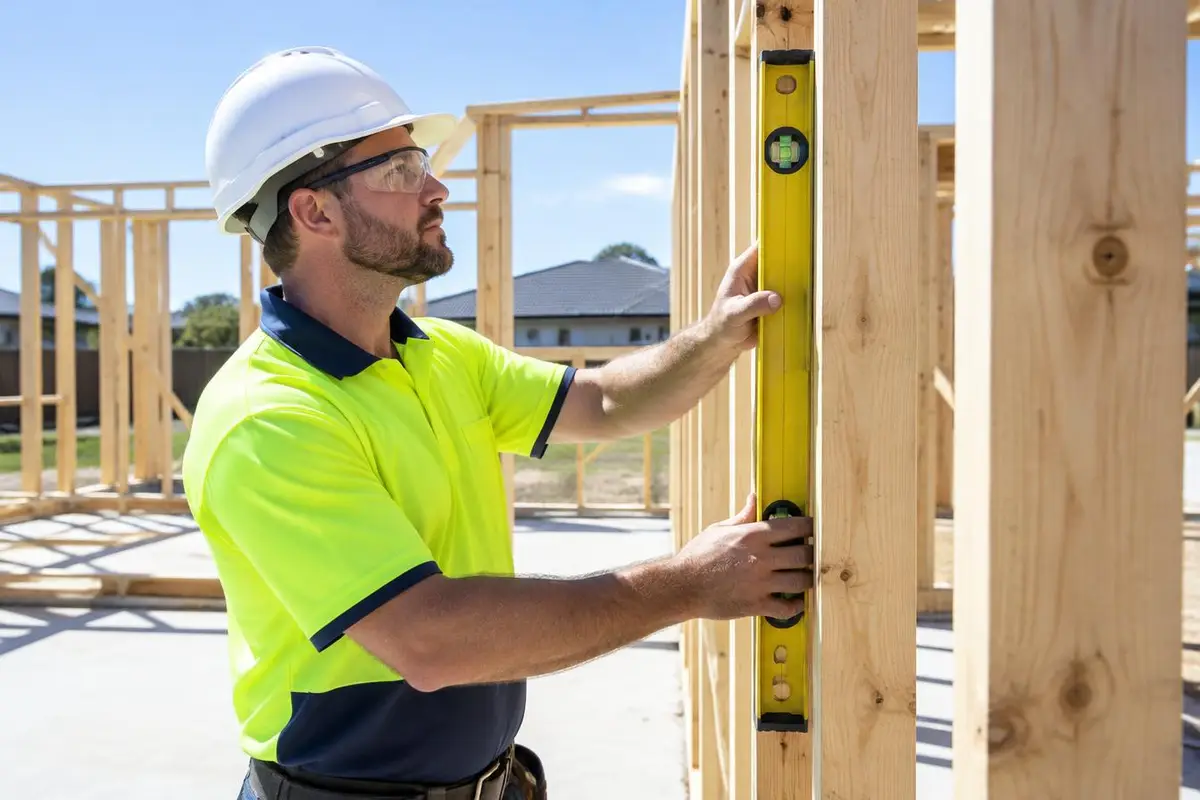
What the trade covers
The national description of CPC30220 calls it a trade qualification for carpenters in residential and commercial workplaces, covering setting out, manufacturing, constructing, assembling, installing and repairing products made from timber and non-timber materials. In practice that ranges from wall and roof framing to stairs, doors, windows, eaves, decking and formwork for concrete.
Most carpenters lean towards one end of the work: structural framing and formwork on new builds, or second-fix work such as doors, architraves and joinery installation. A capable tradesperson understands both, because a frame that is out of square causes problems for every trade that follows.
Setting out and reading plans
Good carpentry starts before the first cut. The carpenter checks the drawings, specifications and engineering details, confirms levels and set-out points, and works out the order of the job. Questions about member sizes, bracing, tie-downs or fixing schedules go back to the builder or engineer rather than being guessed on site.
Accuracy compounds. A small error in a bottom plate or a set-out line can push walls out of position, so experienced carpenters check diagonals and levels at each stage instead of relying on the final measurement.
Read the documents
Drawings, specifications, engineering and fixing details.
Set out
Confirm levels, set-out points and square.
Build the structure
Framing, bracing, tie-downs or formwork as specified.
Check
Plumb, level, square and compliance with the details.
Fit out
Doors, windows, trims, stairs and joinery.
Hand over
Clean up, fix defects and record what was installed.
A simplified view of carpentry work stages. Actual sequences depend on the build, the builder's program and the engineering details.
Working safely on the tools
Carpentry involves work at heights, power tools, manual handling and dust from timber, engineered stone and other products. Planning safe access, using guarding on tools, controlling dust at the source and keeping work areas clear are part of the job, not extras. On many sites the carpenter also works within a safe work method statement where the task is classed as high risk construction work.
Some tasks have their own licence or certification requirements, which vary between states and territories. The qualification can include a basic scaffolding licence unit, but completing a unit does not replace any separate licence an employer or regulator requires.
Quality, tolerances and handover
Builders and clients judge carpentry on finish and fit as much as structure. Carpenters check their work against the specification, fix defects before covering them, and keep the job tidy for the trades who follow. Recording what was installed, particularly where products need specific fixings, protects everyone if questions come up later.
Where the qualification fits
Many people complete carpentry through an apprenticeship. Others have years on the tools without the paperwork. OnShift's carpentry course is described as an experienced-worker pathway: an adviser first reviews whether your work history suits it, and assessment draws on evidence of carpentry you have personally performed, with gap training where evidence falls short. A qualified assessor makes the competency decision.
Whether a carpentry qualification is needed for a contractor or builder licence depends on your state or territory and the type of work. Check with your local building regulator before relying on any qualification for licensing.
Licensing note from the national register
State and territory jurisdictions may have different licensing, legislative, regulatory or certification requirements. General construction induction training (the "white card") is required for anyone carrying out construction work.
Official sources
- CPC30326 Certificate III in Carpentry (training.gov.au) (opens in a new tab)
- CPC30220 Certificate III in Carpentry (training.gov.au) (opens in a new tab)
- Construction work health and safety (Safe Work Australia) (opens in a new tab)
- Crystalline silica (Safe Work Australia) (opens in a new tab)
- RTO 41304 scope of registration (training.gov.au) (opens in a new tab)
Qualification status, descriptions, licensing notes and RTO 41304's scope (which lists CPC30220 as deliver and assess) were checked on training.gov.au on 29 October 2026. Scope shows approval to deliver, not that a particular intake is running.