What Is Foundations and Underpinning Work? Piling, Footings and the Certificate III in Civil Foundations
Foundation crews install the piles, footings and underpinning that carry a structure's loads into the ground. This guide explains the work and how the Certificate III in Civil Foundations relates to it.
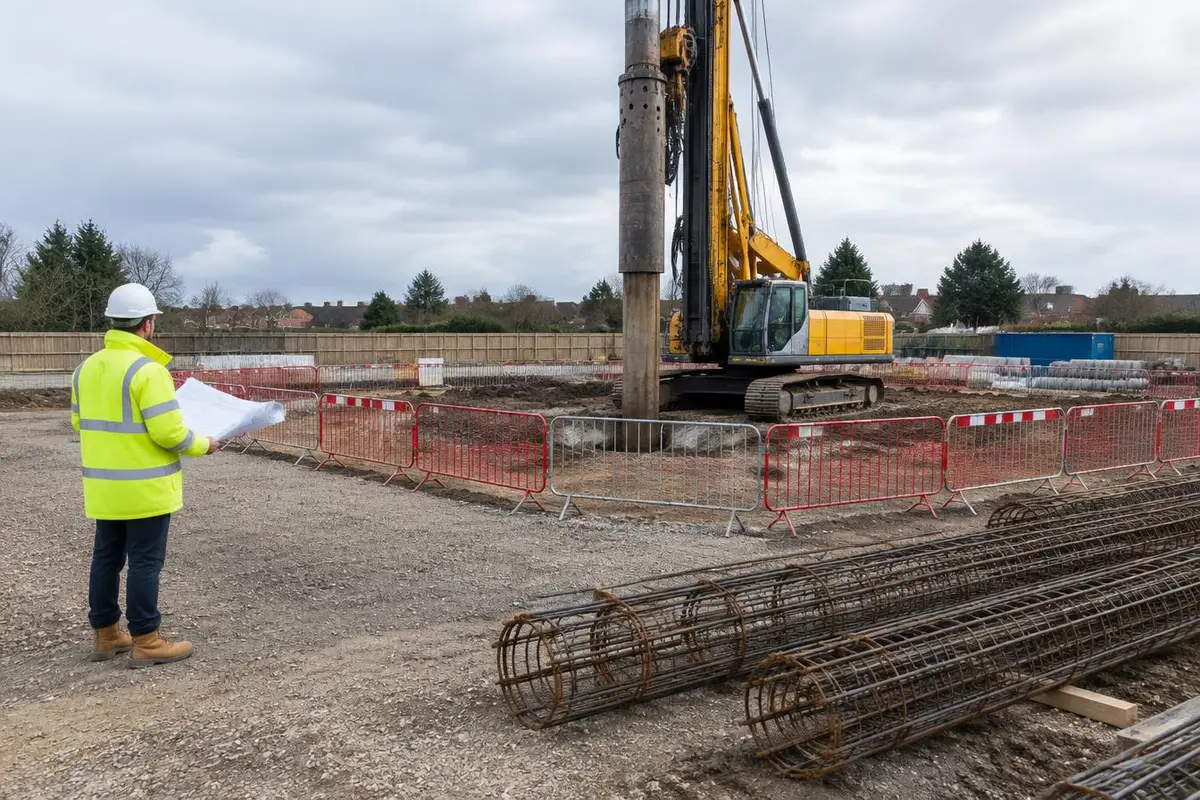
What foundation work involves
The national description of RII31220 reflects a skilled operator performing foundation work in civil construction, applying a broad range of skills with some discretion and judgement, and working collaboratively to support a team.
Depending on the project that may include bored, driven or screw piles, pad and strip footings, ground anchors, or underpinning existing structures that have settled or need deeper support for new works.
Engineering sets the limits
Foundation design depends on ground conditions and loads, so crews work to engineering drawings, geotechnical information and hold points. Pile depths, sizes, reinforcement and concrete must match the design, and any variance in ground conditions, such as unexpected rock, water or fill, is reported to the engineer before work continues.
Underpinning is particularly sensitive because it works beneath a structure that is already standing. The engineer specifies how, where and in what order excavation and new support may proceed; crews follow that design and its hold points rather than a generic method.
Engineering design
Drawings, geotechnical information and the engineer's specified sequence.
Plan the controls
Services, excavation support, plant and neighbouring structures.
Work to the design
Only the extent and order the engineer has specified.
Hold points
Inspections and sign-off where the design requires them.
Report variances
Unexpected ground, water or movement goes back to the engineer.
Record
Keep records of what was inspected and installed.
General overview, not a method. The order, extent and controls for any underpinning job come from its engineering design and site-specific risk assessment.
Safety around excavations and plant
Hazards include deep and narrow excavations, collapse of ground or adjacent structures, piling rigs and other heavy plant, suspended loads, underground services, noise, vibration and silica dust from concrete and rock. Controls include service location, excavation support, exclusion zones around rigs and monitoring neighbouring structures where required.
Where the qualification fits
OnShift describes its course as an experienced-worker pathway for piling, foundations and underpinning crews. An adviser reviews suitability before substantial fees are taken, and assessment combines classroom knowledge tasks, readiness checks and practical evidence on the job. A qualified assessor decides competency.
Licensing and certification requirements for this kind of work can vary between states, territories and industry sectors, and some plant or tasks need separate licences.
Licensing note from the national register
Licensing, legislative, regulatory and certification requirements that apply to this qualification can vary between states, territories and industry sectors. Check requirements with the relevant body.
Official sources
- RII31220 Certificate III in Civil Foundations (training.gov.au) (opens in a new tab)
- Construction work health and safety (Safe Work Australia) (opens in a new tab)
- Crystalline silica (Safe Work Australia) (opens in a new tab)
- RTO 41304 scope of registration (training.gov.au) (opens in a new tab)
Qualification status, descriptions, licensing notes and RTO 41304's scope (which lists RII31220 as deliver and assess) were checked on training.gov.au on 29 October 2026. Scope shows approval to deliver, not that a particular intake is running.