Certificate IV in Demolition Explained: Leading Demolition Teams on Complex Projects
The Certificate IV in Demolition sits above hands-on demolition work. It is aimed at the people who plan and oversee demolition teams on larger and more complex projects. This guide explains that role and who the qualification suits.
Who the qualification is for
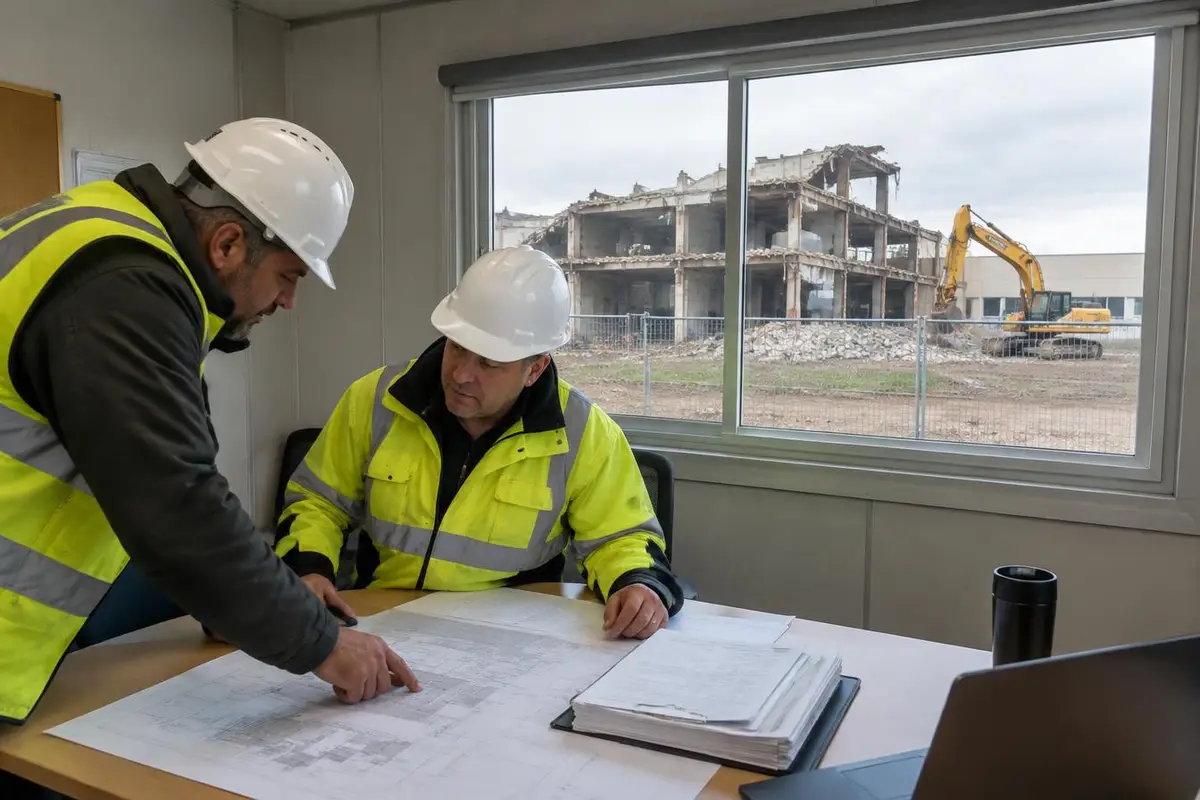
The national description of CPC41020 covers project engineers, project managers, demolition supervisors and leading hands responsible for overseeing a team of demolition workers on specialist demolition of large public, commercial, industrial or residential buildings, structures and installations, including chemical processing plants.
That is a broader management role than running a single small job. It often involves coordinating engineers, hazardous materials specialists, plant contractors and clients over a longer program.
Planning for complex structures
Large or industrial structures add complications: heavy structural frames, pre-stressed or post-tensioned elements, process pipework that may hold residues, confined spaces and work close to operating plant or neighbours. Planning brings together engineering advice, hazardous materials information, isolation of services and process systems, and a method that keeps the remaining structure stable at every stage.
Structural advice
Engineer input on stability and sequence.
Hazardous materials
Surveys, residues and removal plans.
Isolations
Services and process systems made safe.
Method & plant
Techniques, plant selection and limits.
People & licences
Competent crew, tickets and consultation.
Records & review
Inspections, permits and escalation.
Examples of information a demolition lead brings together. Not a complete list; verify what applies to each project.
Leading the team
At this level the job is as much about people and systems as technique. That includes allocating competent workers, checking licences and tickets, consulting on safe work method statements, running inspections and making sure records show what was decided and why. Knowing when to stop work and escalate to engineers, clients or the regulator is a core responsibility.
How it relates to other demolition training
The Certificate III in Demolition reflects hands-on demolition workers. Demolition supervisor skill sets focus on the units commonly referenced for supervising demolition work in some states. The Certificate IV is a full qualification for those leading teams and planning work across a range of projects.
OnShift describes its course as an experienced-worker pathway for leading hands and supervisors already running demolition work, assessed on evidence such as demolition plans, SWMS, site records and employer references, plus a competency conversation and practical verification. A qualified assessor decides competency.
Licensing requirements for demolition differ between states and territories. General construction induction training is required for anyone carrying out construction work, and additional licensing may apply.
Licensing note from the national register
General construction induction training (the "white card") is required for anyone carrying out construction work. Additional licensing, legislative, regulatory or certification requirements may apply in some states and territories.
Official sources
- CPC41020 Certificate IV in Demolition (training.gov.au) (opens in a new tab)
- Asbestos (Safe Work Australia) (opens in a new tab)
- Construction work health and safety (Safe Work Australia) (opens in a new tab)
- RTO 41304 scope of registration (training.gov.au) (opens in a new tab)
Qualification status, descriptions, licensing notes and RTO 41304's scope (which lists CPC41020 as deliver and assess) were checked on training.gov.au on 29 October 2026. Scope shows approval to deliver, not that a particular intake is running.