What Does a Demolition Worker Do? Strip-Out, Dismantling and the Certificate III in Demolition
Demolition workers do the hands-on work of taking structures apart in a controlled order and sorting what comes out. This guide explains the work, the risks and where the Certificate III in Demolition fits.
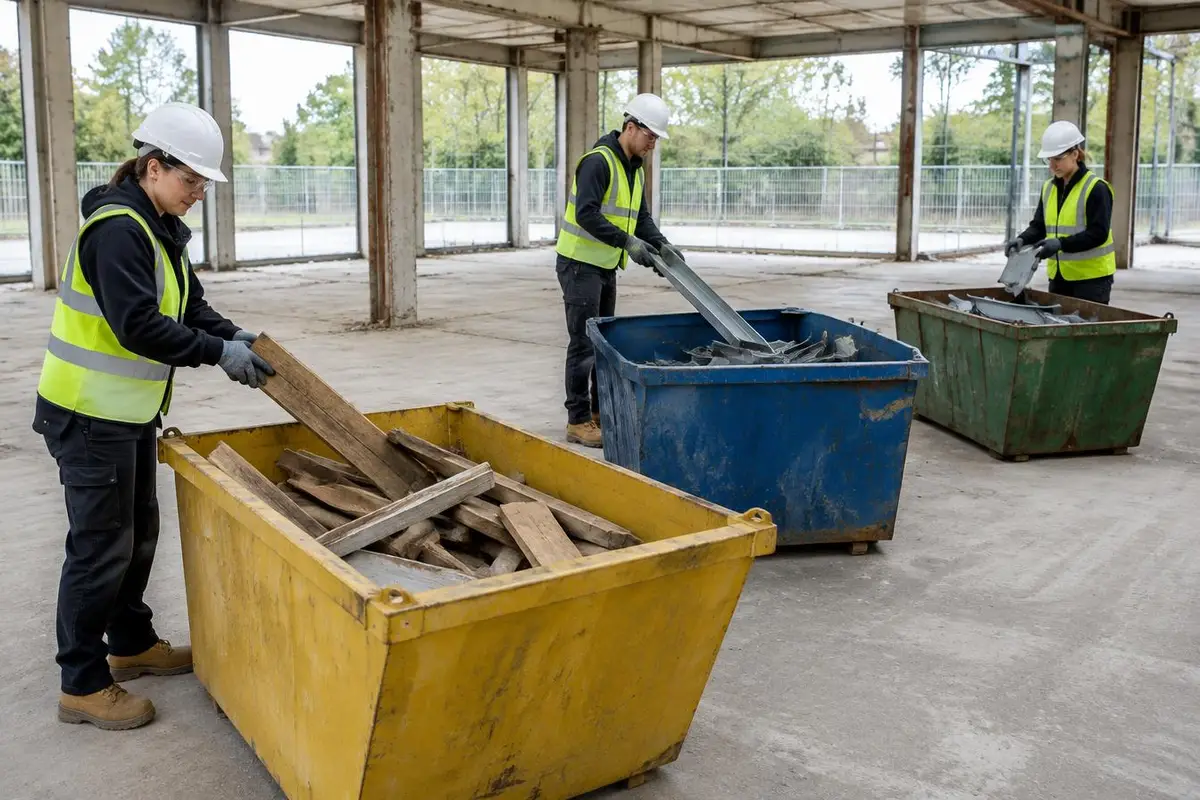
More than knocking things down
The national description of CPC30426 describes specialist demolition workers who dismantle and demolish public, residential, commercial and industrial structures of all types, and process the resulting materials for salvage, recycling and waste disposal. Much of the job is careful strip-out: removing fixtures, linings and services before the structure itself is touched.
Sorting materials matters. Separating timber, metal, concrete and other waste streams supports recycling and keeps disposal costs and environmental impact down.
Following the plan
Workers carry out the sequence set by the demolition plan and the supervisor. That includes keeping to the agreed order, not removing structural members early, and reporting anything that doesn't match what was expected, such as cracking, movement or materials that weren't identified in the survey.
Pre-start
Briefing on today's sequence and controls.
Check the area
Exclusion zones, access and services status.
Strip out
Remove fixtures and linings in order.
Dismantle
Only as the plan and supervisor direct.
Sort materials
Separate salvage, recycling and waste.
Report
Raise movement, suspect materials or changes.
Illustrative only. The site's demolition plan, SWMS and supervisor's directions always govern the actual work.
Hazards on a demolition job
The main risks include unplanned collapse, falling objects, falls from height, mobile plant, sharp and heavy materials, noise, dust and hazardous materials. Asbestos, lead paint and silica dust need particular care: suspected materials are left alone and reported, and only appropriately licensed people remove asbestos where a licence is required.
Exclusion zones, dust suppression and isolation of services are everyday controls, with personal protective equipment as a last line of defence rather than the main control. Workers should never assume a service is disconnected without confirmation.
Where the qualification fits
OnShift describes its Certificate III in Demolition course as an experienced-worker pathway for people with years on site who lack the formal qualification. An adviser checks suitability, and assessment draws on evidence of work you have performed. A qualified assessor decides competency.
Licensing and regulatory requirements for demolition work differ between states and territories, so a qualification on its own may not authorise particular work. If you are new to demolition, our NSW demolition worker training is a shorter starting point.
Licensing note from the national register
Licensing, legislative, regulatory or certification requirements for demolition work differ between states and territories. Consult the relevant regulatory authority.
Official sources
- CPC30426 Certificate III in Demolition (training.gov.au) (opens in a new tab)
- Asbestos (Safe Work Australia) (opens in a new tab)
- Crystalline silica (Safe Work Australia) (opens in a new tab)
- RTO 41304 scope of registration (training.gov.au) (opens in a new tab)
Qualification status, descriptions, licensing notes and RTO 41304's scope (which lists CPC30426 as deliver and assess) were checked on training.gov.au on 29 October 2026. Scope shows approval to deliver, not that a particular intake is running.