
Making a Reasoned Design Record
Build a reasoned design record by comparing alternatives, preserving source links, communicating decisions and managing revisions and information securely.
The recommendation needs a trail
Imagine a team considering two ways to renovate a living room. One option keeps the existing external wall and changes the glazing and shading. Another replaces part of the wall with a different insulated assembly. Both can be drawn attractively. The useful recommendation explains what problem each option addresses and what evidence supports the comparison.
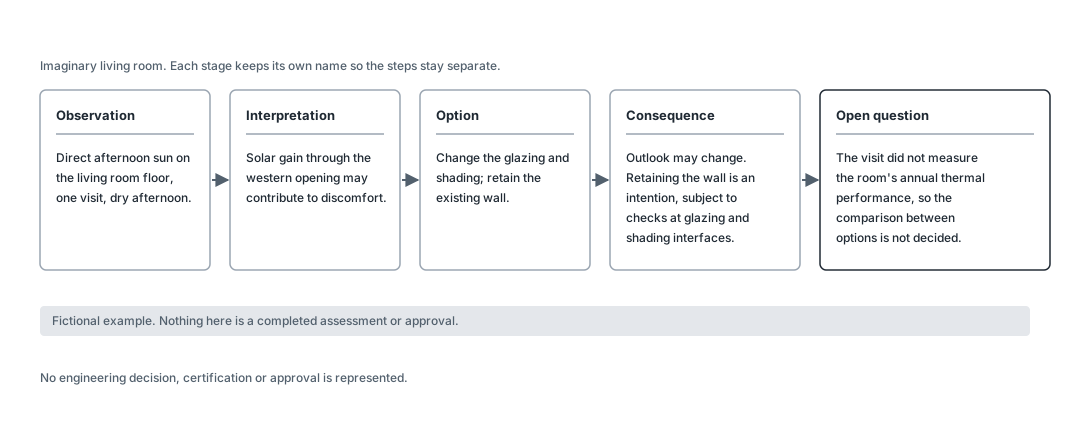
One chain from observation to open question
One imaginary living-room problem carried through five stages of a reasoned record.
- Observe
- Follow the single chain across: observation, interpretation, option, consequence, and the open question that still needs an answer.
- Interpret
- The stages belong together but stay visible separately, so a later reader can see which step an argument actually rests on.
- Do not infer
- Do not read this as a completed technical assessment, an approval, or a recommendation for any real room.
- Try next
- Write the same five lines for a decision you are currently carrying in your head.
Sources and limits for this figure
Original fictional teaching diagram created for this Fieldbook.
Five panels are linked in one chain across the figure. The first, Observation, records direct afternoon sun on the floor of an imaginary living room during a single visit on a dry afternoon. The second, Interpretation, identifies solar gain through the western opening as a possible contributor to discomfort. The third, Option, proposes changing the glazing and shading while retaining the existing wall. The fourth, Consequence, notes that this option may change the outlook and that retaining the wall is an intention, subject to checks where new glazing and shading meet the retained construction.
The fifth panel, Open question, is deliberately the widest: the visit has not measured the room's annual thermal performance, so the comparison between options is not yet decided.
Each panel carries its stage name in the same position, so the roles stay visible as separate steps rather than merging into a single recommendation. A footer states that the example is fictional and that nothing shown is a completed technical assessment, an engineering decision or an approval.
Original fictional teaching diagram — created for this Fieldbook.
Source and rights:Original fictional teaching diagram
Created for this Fieldbook from chapter 17, sections 'The recommendation needs a trail' and 'Separate what was found from what it means'. It is not a completed assessment or approval record.
The first task is to state the problem accurately. Is the room uncomfortable because of afternoon solar gain, heat loss, air leakage or a combination? Does the client also want a different connection to the garden? Thermal performance and spatial use may both matter, but they should not be merged into a vague wish for improvement.
A reasoned record connects the brief, observations, sources, alternatives and decision. It allows another person to understand why the team reached a conclusion. That continuity is valuable when a colleague takes over the work, a supplier proposes a substitution or the client revisits an earlier choice.
Separate what was found from what it means
An observation records what was seen or measured under stated conditions. An interpretation explains its possible significance. A recommendation proposes a response. These stages belong together, but their different roles should remain visible.
For the living room, an observation might record direct afternoon sun on the floor during a particular visit. An interpretation might identify solar gain through the western opening as a possible contributor to discomfort. A recommendation might propose testing a shading option with the relevant design information. The visit alone has not measured the room's annual thermal performance.
Photographs, measurements and source references strengthen the record when they have useful locators. A photograph needs to be connected to a location and view direction. A measurement needs endpoints and units. A product claim needs the actual product and the conditions behind it. A folder of unlabeled files preserves material without preserving understanding.
The limits of an observation can be stated without making the whole report hesitant. Record that the visit occurred on a dry afternoon and that concealed construction was not opened. Then explain the conclusions that the available evidence does support. The purpose is to make the reasoning proportionate, not to surround every sentence with uncertainty.
Compare alternatives on the same basis
A comparison should use criteria that matter to the project. These may include thermal behaviour, appearance, structural implications, maintenance, construction access, environmental impact and cost. The criteria should be defined well enough that the options are actually comparable.
For example, the price of cladding alone cannot be compared directly with the installed price of a complete wall assembly. One figure may omit framing, membranes, insulation, flashings and labour. The apparent difference can disappear or reverse when the scope is aligned.
A spreadsheet can help organise the comparison. Rows can identify the criteria, while columns identify options and their supporting evidence. Units and assumptions should be visible. A number entered without its basis can create false precision even when the spreadsheet calculates correctly.
Imagine comparing maintenance costs over a stated period. One option's figure includes repainting while the other's omits access equipment. The arithmetic total may be flawless, but the comparison is incomplete. Checking the meaning of inputs is as important as checking the formula.
Weighting criteria can make priorities explicit, but it does not remove judgement. A high score for appearance cannot cancel an unresolved structural requirement. Some conditions must be satisfied before an option is available at all. Preferences should be compared within that feasible set.
A recommendation can therefore be conditional in a useful way. It might prefer the retained-wall option because it addresses the identified solar-gain path with less alteration. That preference requires verification of the existing wall and proposed glazing. The condition names the evidence needed to support the next step.
Research should leave a retrievable record
Suppose the team wants to understand whether a verandah belongs to a house's original construction or a later phase. Searching only the street address may produce property advertising, photographs and unrelated listings. Adding the building name, architect or a custodian's name can produce a more relevant source trail.
Search results are leads. Open the actual record and identify its author or institution, subject, dates and evidence. A construction-date field may differ from the narrative. A later photograph may show changes absent from the original plan. Record the discrepancy rather than silently choosing the most convenient date.
Return to the Tusculum example in chapter seven. Store the record's significance, physical-description and history locators together, so a colleague can test the proposed claim against more than one part of the source. A single style label would discard the distinction the research was meant to preserve.
A useful research entry identifies the record title, institution, URL, access date and the relevant heading or page. It then states the particular claim supported and preserves any qualification attached to that claim. This is much easier to retrieve than a saved file named interesting house.
The same method applies to technical information. A manufacturer bulletin needs its actual revision and product scope. A standard needs its edition and the role it plays in the project's applicable pathway. A downloaded date is useful for provenance, but does not replace the publication or issue date.
Storing a source is also different from having permission to distribute it. An office may need licensed standards for its work. A public website may permit reading while reserving image reproduction. The design record should preserve the source and relevant rights information without assuming that every reference can be republished in a client or public document.
A reference collection that can be retrieved
Suppose a colleague asks for the source behind the Tusculum example from chapter seven. A useful collection contains a record that can be found by the building name, place, period and research question. The companion includes a filled example with the official heritage item number and a direct source link.
The filled record identifies a claim, the official source, relevant passages and an interpretation boundary. Its version field tells a colleague when the cited source field was updated and when it was inspected. Those dates describe the research record; they are not construction dates. This separation makes the entry useful even when a later question concerns a different detail.
Retrieval has a practical sequence. Search for Tusculum and check that the result concerns the Potts Point property. Open the linked item and locate its history and description. Then compare the proposed claim with the actual passage. A saved label saying “Italianate house” would have discarded the very distinction the research was meant to preserve.
If the source changes, retain the earlier recorded basis and add a dated update. A collection becomes valuable through these connections, not through the number of downloaded files. A colleague should be able to follow the reasoning without relying on the original researcher's memory.
Use office tools for connected purposes
Word-processing software is useful for reports because headings, captions, cross-references and revision information can organise a connected explanation. A consistent document structure helps the reader find the conclusion and its basis. Formatting cannot repair missing evidence, but it can prevent sound evidence from becoming difficult to follow.
Spreadsheets support calculations, comparisons and registers. Their formulas should remain distinguishable from manually entered values. An independent check can test a result using a simple example or another calculation method. Copying a formula down a column can also copy an incorrect reference, so repetition is not proof of correctness.
Email communicates requests and decisions. The subject and opening should identify the project and purpose. A message asking for a decision should state the alternatives, consequence and response needed. Relevant drawing numbers and revisions prevent a discussion from drifting between different proposals.
Calendars organise time, but a calendar booking does not confirm that the required information will be available. A site visit may depend on access arrangements and a survey request. A review meeting may depend on consultant inputs. The programme should connect deadlines with those dependencies.
Drawing and modelling software support geometry and documentation. Their outputs still depend on the information entered and the way views are configured. A model can contain an element that is hidden in one view. A schedule can filter out an item. A visually convincing model is not proof that every drawing communicates the same current design.
The practical aim is a connected information process. A decision recorded in a report may require updates to a drawing, schedule and comparison sheet. The issue record should make those changes visible. Keeping each tool's file in a separate folder does not by itself connect their contents.
File identity prevents accidental ambiguity
The file name should work with the office's document-control convention. Project identity, document type, revision and status may be included according to that convention. The titleblock and issue register should agree with the file being distributed.
Names such as final, final-new and final-really-new create ambiguity because they describe the writer's momentary intention rather than a stable issue. A defined revision identifies a particular document state. Its status identifies the permitted purpose, such as review or a later authorised use.
Working files and issued records have different roles. The working file continues to change. The issued record preserves what was provided at a particular time. Retaining that distinction helps resolve later questions about which information another party received.
An issue register records the relevant document identifiers, revisions, dates, purposes and recipients. It does not replace the documents. It connects them to an event in the project. A change after issue needs to enter the appropriate revision process so it can be distinguished from the earlier state.
References between documents also need maintenance. Renaming a detail or moving it to another sheet can break a callout. Updating a window type can affect both plan tags and schedule entries. A review should follow the references most likely to be affected by the change, rather than only inspect the visibly edited sheet.
Protect the information as well as the geometry
Design offices hold client details, site information, drawings and commercial records. Access should suit people's roles. A shared password can make it difficult to identify who changed or distributed information. Individual accounts and controlled access support both security and accountability.
The Australian Signals Directorate's small-business guidance recommends multi-factor authentication, software updates and backups among its basic protections. Multi-factor authentication adds a distinct verification factor beyond a password. Updates address known software weaknesses. Backups support recovery when information is lost or damaged. These measures serve different purposes and work together.
Before sending a document, check its recipients and the information included. An external recipient may need the issued drawing without unrelated client records or internal commercial notes. A link's sharing permissions matter as much as the message containing it. The office's approved systems and procedures should govern distribution.
Reliable recovery also needs planning. A backup that cannot be restored when needed has limited practical value. The responsible technical support should establish the backup arrangement and appropriate recovery checks. A drafter should know where authorised work is stored and how to report a suspected loss or security incident.
Convenience should not make a personal account or an unapproved upload service the default project archive. The immediate transfer may work while creating uncertainty about access, retention and future retrieval. Use the authorised workflow and obtain help when it does not support the task.
Explain a finding to the person who needs it
A client often needs the consequence and available choices before the technical detail. A structural consultant may need exact geometry, loads and source drawings. A site team needs the current issued information and a clear location. Adapting the explanation does not mean changing the underlying facts.
For the living-room renovation, a client explanation might begin with the likely benefit of controlling afternoon sun and the effect on the garden view. The technical request would then identify the glazing, shading geometry and modelling assumptions needed. Both descriptions concern the same proposal at different levels of detail.
A diagram or marked drawing can make the relationship clearer. It should identify what is existing, proposed or unresolved. Colour alone is a fragile distinction because prints and displays vary. Labels and line conventions should preserve meaning when the image is viewed differently.
When a disagreement emerges, return to the shared evidence and decision criteria. One person may be discussing initial cost while another is discussing maintenance or thermal behaviour. Naming the different criteria can reveal that the disagreement concerns priorities rather than contradictory facts.
Review changes in their surroundings
A local correction can create a new problem nearby. Moving a door can improve furniture access while conflicting with a switch or a required wall segment. Raising a floor can simplify one threshold while changing stair geometry. A review needs to consider the affected relationships around the change.
The most informative check asks what the change depends on and what depends on it. For a window, follow the plan location, elevation height, schedule, structural opening, flashing and specification. For a site level, follow drainage, access, floor relationship and relevant survey information.
The reviewer should record findings precisely enough to be resolved. Once a correction is made, verify the revised result rather than assume that responding to the comment completed the task. A note marked addressed is a record of workflow; the drawing itself must contain the intended change.
Leave the next person able to continue
A useful design record makes the current position understandable. It identifies the preferred proposal, the reasons behind it, the evidence used and the questions that remain. It does not pretend that every uncertainty has disappeared before the next stage can begin.
The chapters bring together a connected vocabulary for that record. Plans locate; elevations show faces; sections reveal selected relationships through a cut. Materials have different properties and work through assemblies. Sites contribute both measured geometry and conditions that require investigation.
Historical evidence adds another dimension. Buildings express changing ideas, resources and patterns of life, often through several phases. Their visible features can be interpreted more carefully when form, use, material and source are considered together.
These forms of understanding meet in the same professional habit: connect a statement to the situation it describes. Explain why it matters, what supports it and what further information would change the conclusion. That habit makes a drawing, a conversation and a written recommendation more useful to the people who must turn a design into a building.