New South Wales · OnShift Education
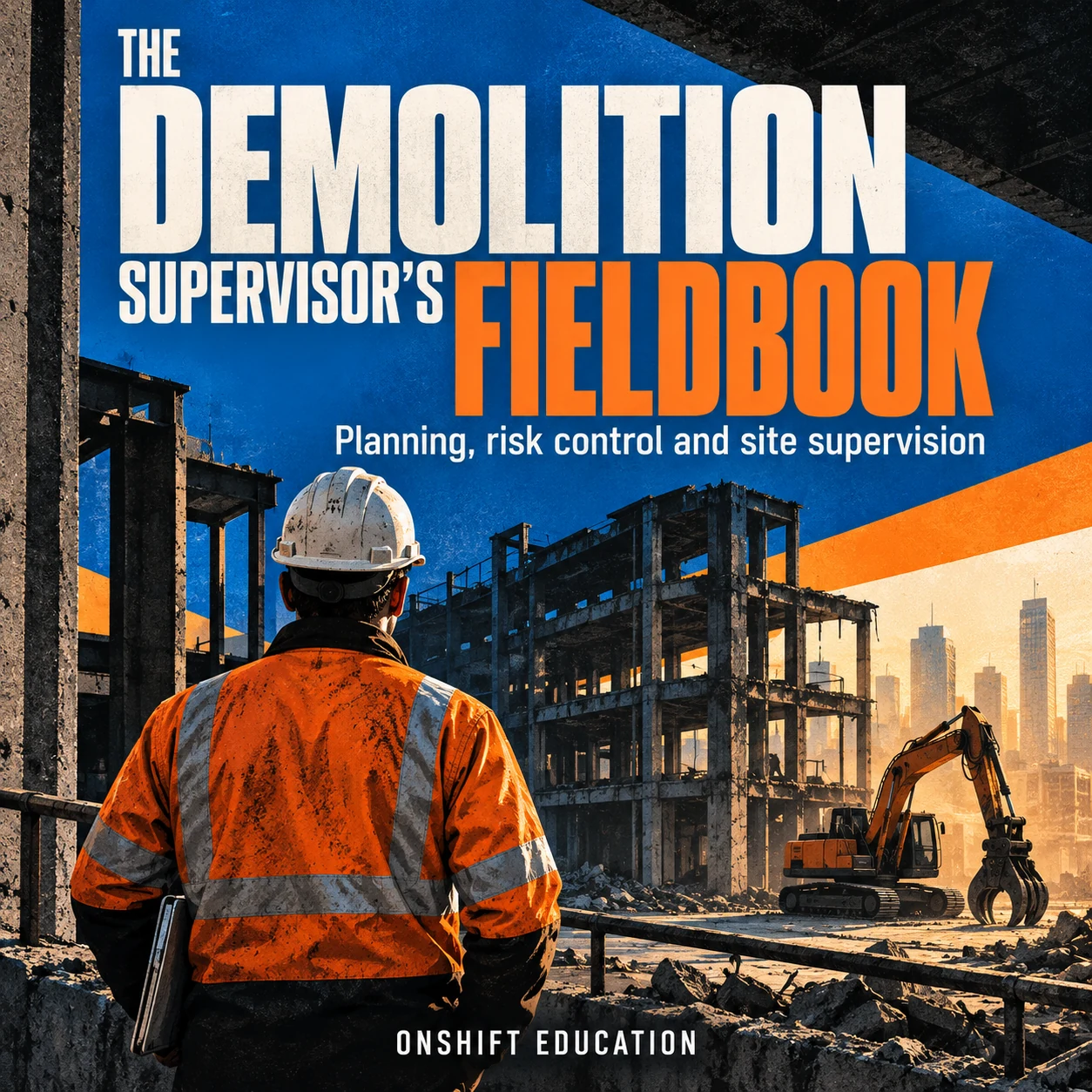
The demolition supervisor’s fieldbook
Planning, risk control and site supervision
Demolition changes both a structure and the conditions around it. Removing one element can alter load paths, expose hazardous materials or change the interaction between plant, workers and neighbouring properties. Supervision connects these physical changes with the engineering information, work sequence and controls needed at each stage.
Contents
IntroductionFoundations of demolition supervision
The demolition business compliance system
- 07Law, standards and project controls
- 08HSEQ systems and minimum standards
- 09Roles, responsibilities, authority and escalation
- 10Consultation, communication, induction, training and toolbox talks
- 11Fitness for work, fatigue, wellbeing and worker support
- 12Audits, inspections, incident investigation and continuous improvement
- 13Records, registers, diaries and document control
Hazard and risk control
- 14Hazard identification and the hierarchy of control
- 15Structural integrity, falling objects and flying debris
- 16Services, isolation and hazardous energy
- 17Plant, people and exclusion zones
- 18Dust, silica, airborne contaminants, noise and vibration
- 19Fire, explosion, residual fuels and hot-work interfaces
- 20Working at heights, confined spaces and rescue planning
- 21Traffic, public protection and neighbouring properties
- 22Water, stormwater, groundwater, waste and environmental protection
- 23Hazardous materials and asbestos interfaces
Demolition planning and project documents
- 24Scope, specifications and site information
- 25Site inspection and pre-commencement checks
- 26Demolition work plans and sequencing
- 27SWMS, risk assessments and control verification
- 28Environmental, traffic and emergency plans
- 29Permits, notifications and authorisations
- 30Inductions, briefings, communication and change control
- 31Project resources, schedules, plant and workforce planning
Plant, tools and operational knowledge
- 32Small plant and equipment selection
- 33Hand tools, demolition tools and equipment limitations
- 34Pre-starts, maintenance, faults and safe operating information
- 35Small-structure demolition processes and sequencing
- 36Hot work: cutting, grinding, gas equipment and fire prevention
- 37LEL concepts, atmospheric hazards and escalation
- 38Materials, stockpiles, salvage, recycling and load-out
Plans, structures and engineering interface
- 39Demolition plans, drawing views and specifications
- 40Legends, symbols, abbreviations, scale, levels and dimensions
- 41Plan currency, amendments and site orientation
- 42Structural systems and load paths
- 43Structural behaviour: compression, tension, bending and combined actions
- 44Floors, walls, roofs, cladding, columns and retaining systems
- 45Soil, ground capacity, temporary works and adjacent structures
- 46Engineering reports and conditions for stopping work