
Fire, explosion, residual fuels and hot-work interfaces
Ignition sources can interact with concealed fuels and residual contents. Hot-work controls depend on the actual equipment, atmosphere, location and surrounding activities.
Fuel, ignition and atmosphere
Fire needs a suitable combination of fuel, an oxidising environment and an ignition source. In ordinary workplace discussion this is often described as the fire triangle. The model is useful because it directs attention beyond the tool producing sparks. Fuel might be packaging, insulation, coatings, liquid residues or combustible dust. Ignition might come from hot work, a hot surface, electrical equipment or another nearby activity.
An explosion can involve a rapid release of pressure or energy. A flammable atmosphere is one possible cause, but not the only pressure hazard. Stored pressure and unstable materials need their own assessment. Do not treat every vessel hazard as something resolved by removing a visible flame. The substance, equipment and intended disturbance determine the questions that need answering.
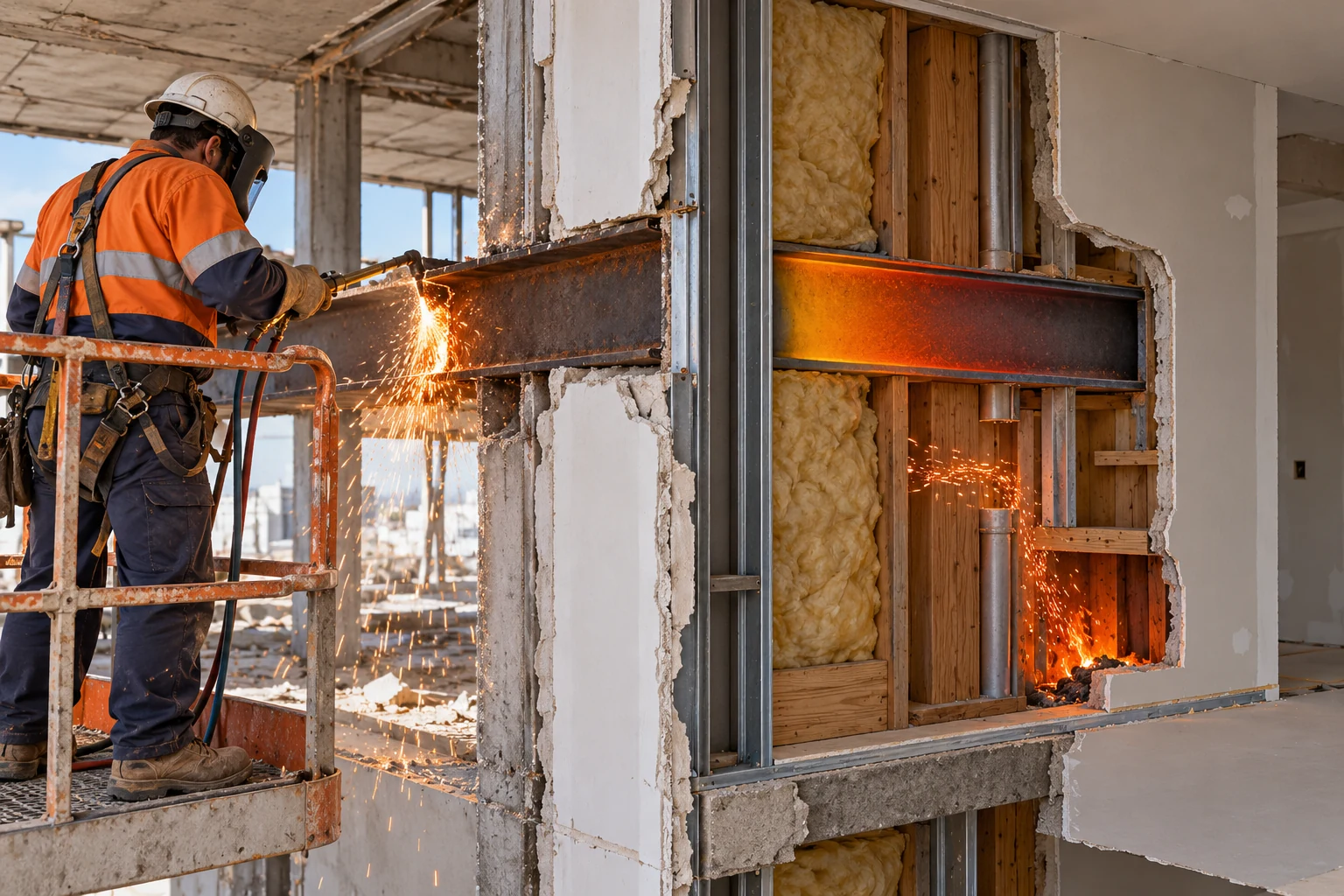
Demolition can expose previously enclosed fuel or create new pathways for heat and sparks. A cavity, opening or connected pipe can link the workface with a place that is not visible to the operator. A clean area on one side of a wall does not establish conditions on the other side.
A building may contain redundant process equipment. The demolition drawings identify the equipment's shape, but do not establish what remains inside it. Its former use, cleaning history, connected systems and current condition are relevant inputs. The supervisor should recognise that missing information affects method selection and authorisation before the equipment is disturbed. The uncertainty should not be discovered only after hot work has begun.
Empty does not mean free of hazardous contents
A container may be empty of usable product while retaining liquid films, sludge, vapour or pressure. The space above a liquid can contain a hazardous atmosphere. A label saying empty may describe inventory status, not technical preparation for dismantling. This distinction applies to tanks, drums, pipes and other equipment that has contained hazardous substances.
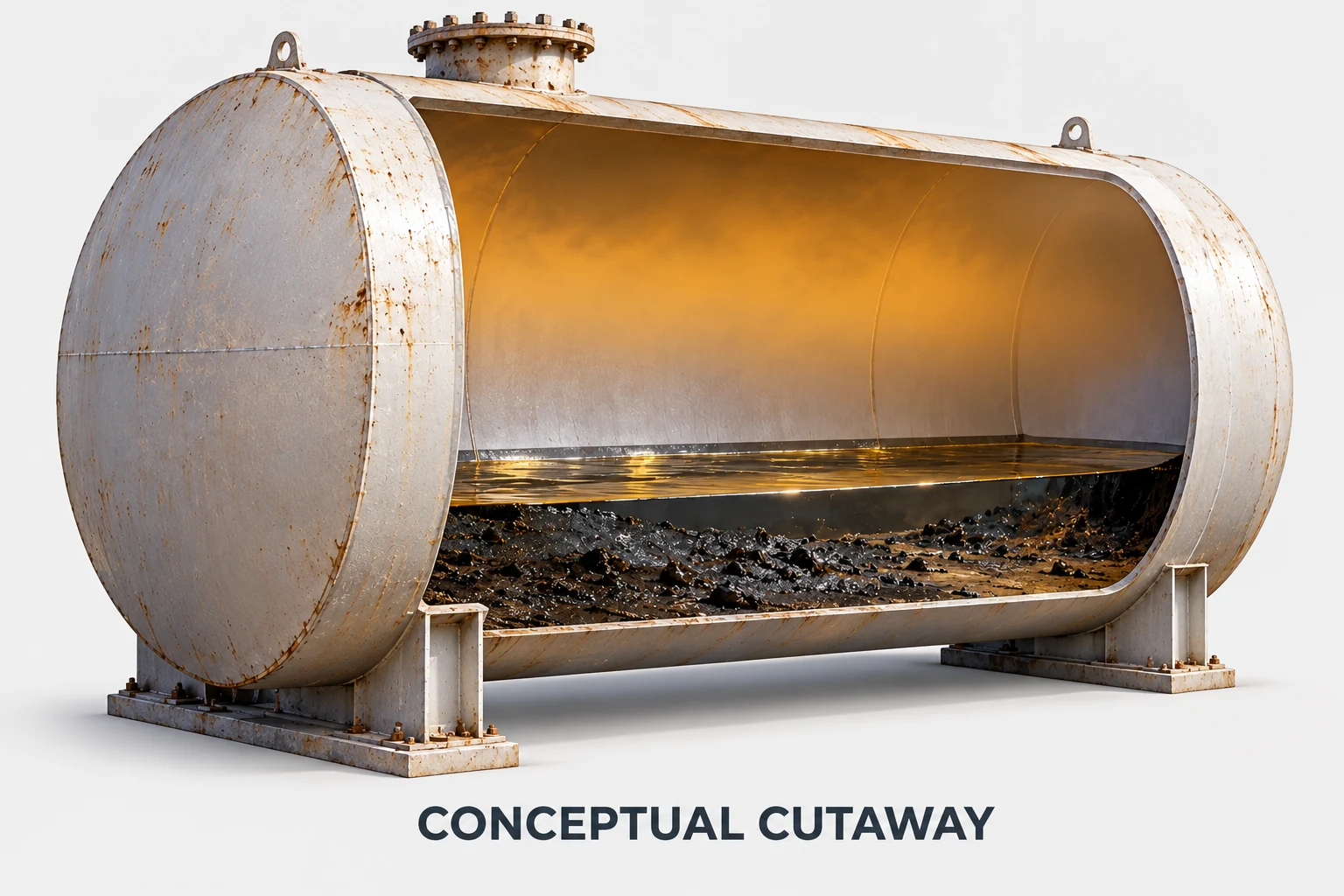
Inventory status does not establish readiness for dismantling. Residues, atmosphere, pressure and connections need the relevant specialist evidence.
The cutaway and amber tint are teaching devices, not normally visible vapour, an actual open tank or a contents identification.
OnShift educational illustration, AI-generated and visually reviewed for this preview; not a project photograph.
- SafeWork NSW · Hot work safety alert
- SafeWork NSW · Hot work explosion safety information
- SafeWork NSW · Demolition: current industry guidance
Evidence about former contents can come from operating records, labels, safety data sheets and the people responsible for the installation. Those sources can guide the investigation, but historical information alone does not establish today's atmosphere. Alteration, contamination or incomplete records may leave important uncertainty. A container with an unknown history should not be treated as harmless scrap.
A technical certificate or test report must be read for the equipment, condition, time and work it covers. A result obtained under one set of conditions does not automatically remain applicable after those conditions change. Contents may move, temperature may change, a connection may be opened or another process may begin. The responsible specialist determines suitable preparation, testing and continuing controls.
Draining a tank describes one action. Releasing it for a defined activity requires evidence about remaining residues, atmosphere, pressure and connections under the proposed conditions. Cleaning, purging, testing and opening a vessel need specialist planning because they can themselves create fire, explosion, inhalation and confined-space hazards.
The Cardwell case brings this distinction into a tender-reading exercise. The historical manifest and layout describe a recorded fuel installation. The tender addendum describes a removal obligation. Neither is a record that the installation has been made safe for the proposed activity. Read the actual status and scope of any specialist evidence before relying on it.
The generic canopy illustration LA-05 teaches a different question: how sheets, purlins, beams and columns relate. It does not establish the old station's connections or provide a tank-removal method. Structural interpretation and fuel-system status must remain separate inputs to planning.
Interpreting a control record
A control record for a material-transfer area needs to identify the activity, location, revision and intended use. These details establish whether the document applies to the work. Its supporting information and unresolved assumptions are equally important: changing a heading does not make an unrelated record applicable.
A hazard entry must explain the route to harm. Terms such as plant or debris identify a subject but not the exposure. The record needs to establish how movement or material could reach workers, visitors, neighbouring property or an environmental receptor. Deliveries and changing work areas can alter those pathways.
The control entry distinguishes measures that are proposed from those already implemented. It identifies how each measure reduces exposure, who establishes and maintains it, and what technical information it depends on. Exclusion distances and load limits require the relevant site-specific basis; they cannot be derived from a generic form.
Verification must address the condition being relied upon. A photograph may establish the location of a sign, but it cannot establish the capacity of a structural support. A signature may record acknowledgement without verifying the assumptions behind the arrangement.
If a delivery blocks the planned route, the review must address the changed movement and exposure. The revised arrangement must be communicated and obsolete instructions withdrawn from use. Traffic arrangements, the demolition work plan, relevant safe work method statements, emergency access and briefings must remain consistent. A permit authorises a defined activity under specified conditions; it does not replace unrelated technical confirmations.
Hot-work permits and coordination
Hot work is work capable of introducing ignition through heat, flame or sparks. It can include welding, thermal cutting and some grinding or sawing. The first planning question is whether a suitable alternative avoids that ignition source. An alternative still needs assessment for its own structural, mechanical, dust and access risks; cold does not automatically mean safe.
A hot-work permit is a controlled authorisation for specified work under stated conditions. Read its location, task, equipment, period, responsible people, prerequisites, related records and closure requirements. It should align with the actual work, relevant safe work method statement and surrounding operations. A permit issued for one area cannot simply be carried into another because the same worker holds the tool.
The permit should make critical interfaces visible. These may include hazardous contents, nearby combustible material, protected services, fire-protection arrangements, observation, ventilation, atmospheric assessment where required and emergency access. The technical details must come from the assessed procedure and competent inputs. A signature does not make a missing control exist.
Consider work near a retained business. Its deliveries, storage changes or ventilation operation may alter the conditions assumed when the permit was issued. Coordination needs to establish how those changes are communicated and when work must be held for review. The permit is useful because it ties a defined decision to current conditions. It does not transfer every responsibility to the person who signs the final box.
Prevention, response and close-out
Emergency planning asks what people do if prevention fails. The arrangements need an alarm method, communication, evacuation, emergency-service access and appropriate trained roles. Equipment must suit the assessed hazards and be available where the plan assumes it is. A list of extinguishers does not establish that a person can safely attack a particular fire.
If there is fire, a suspected explosive atmosphere or another immediate threat, raise the alarm and follow the site's emergency arrangements from a safe position. Call Triple Zero for an emergency. Do not enter a smoke-filled space, approach an unknown vessel or attempt an improvised rescue. Any limited response by trained personnel must remain within the established plan and their capability.
Close-out is more than putting a tool away. It records the status of the authorised work, required observations, outstanding restrictions and any affected service or protective arrangement. A later shift needs to know if a permit is closed, suspended or still subject to conditions. Unknown status should not silently become released status overnight.
Applicable standards, manufacturer instructions and project procedures govern the controlled activities. A change to contents, atmosphere, location or neighbouring work can alter the precautions and authorisation needed.