
Site inspection and pre-commencement checks
Inspections test site conditions against the assumptions and prerequisites for work. Traceable observations and suitable verification establish what has been checked and what remains unresolved.
Inspection purposes and limits
An inspection is a deliberate examination of conditions for a stated purpose. A preliminary inspection develops the project picture. A pre-commencement check asks whether the prerequisites for a defined activity are established. A routine inspection checks continuing conditions. A specialist inspection addresses questions requiring particular expertise. These purposes overlap, but they should not be confused.
Before inspecting, identify the relevant scope, drawings, known hazards and information gaps. This gives the inspection direction. Looking around without a question can produce many photographs while missing the condition that controls the next stage. The inspection should test whether the site matches the assumptions in the current plan.
Gathering information is itself work. Access may involve unstable material, services, hazardous substances, falls or confined spaces. Use authorised safe locations and methods, and record limitations. Do not remove a cover, enter a void or disturb a material merely because the visit is described as an inspection. Intrusive investigation needs its own controlled arrangement.
A plan may assume a clear route to a loading area. The inspection needs to establish the route's current availability, relevant dimensions and interfaces, not simply photograph the loading area. If part of the route cannot be safely viewed, that remains a limitation. The useful output is a set of answered questions and visible gaps. It is not a broad statement that the site was inspected and therefore everything is acceptable.
Traceable site observations
A strong observation identifies the feature, location, date, condition and relevant context. Use stable references such as grid lines, levels, boundaries or labelled assets where available. Informal landmarks can disappear during demolition. The phrase crack near the door may become impossible to interpret after the door is removed.
Photographs should include both context and detail, taken without creating exposure. A wider image helps locate the feature; a closer image records the condition. Note the direction and any important scale information, while avoiding an unsupported impression of measurement precision. A photograph can document appearance but cannot reveal concealed capacity or confirm a chemical identity.
Separate observation from interpretation. Water present beside a service trench is an observation. Groundwater leak is a possible interpretation that needs investigation. A record may include both, provided the uncertainty is explicit. This lets the responsible reviewer decide what further information is needed.
Also record what could not be inspected and why. An inaccessible ceiling cavity, obscured connection or locked room should not disappear from the final summary. Link the limitation to the affected work and the person responsible for resolving it. A concise, accurate limitation is more useful than a confident all-clear statement unsupported by access. Preserve the original record when later information arrives, adding the finding and its date so that the evolution of the project picture remains understandable.
Interpreting a control record
A control record for a material-transfer area needs to identify the activity, location, revision and intended use. These details establish whether the document applies to the work. Its supporting information and unresolved assumptions are equally important: changing a heading does not make an unrelated record applicable.
A hazard entry must explain the route to harm. Terms such as plant or debris identify a subject but not the exposure. The record needs to establish how movement or material could reach workers, visitors, neighbouring property or an environmental receptor. Deliveries and changing work areas can alter those pathways.
The control entry distinguishes measures that are proposed from those already implemented. It identifies how each measure reduces exposure, who establishes and maintains it, and what technical information it depends on. Exclusion distances and load limits require the relevant site-specific basis; they cannot be derived from a generic form.
Verification must address the condition being relied upon. A photograph may establish the location of a sign, but it cannot establish the capacity of a structural support. A signature may record acknowledgement without verifying the assumptions behind the arrangement.
If a delivery blocks the planned route, the review must address the changed movement and exposure. The revised arrangement must be communicated and obsolete instructions withdrawn from use. Traffic arrangements, the demolition work plan, relevant safe work method statements, emergency access and briefings must remain consistent. A permit authorises a defined activity under specified conditions; it does not replace unrelated technical confirmations.
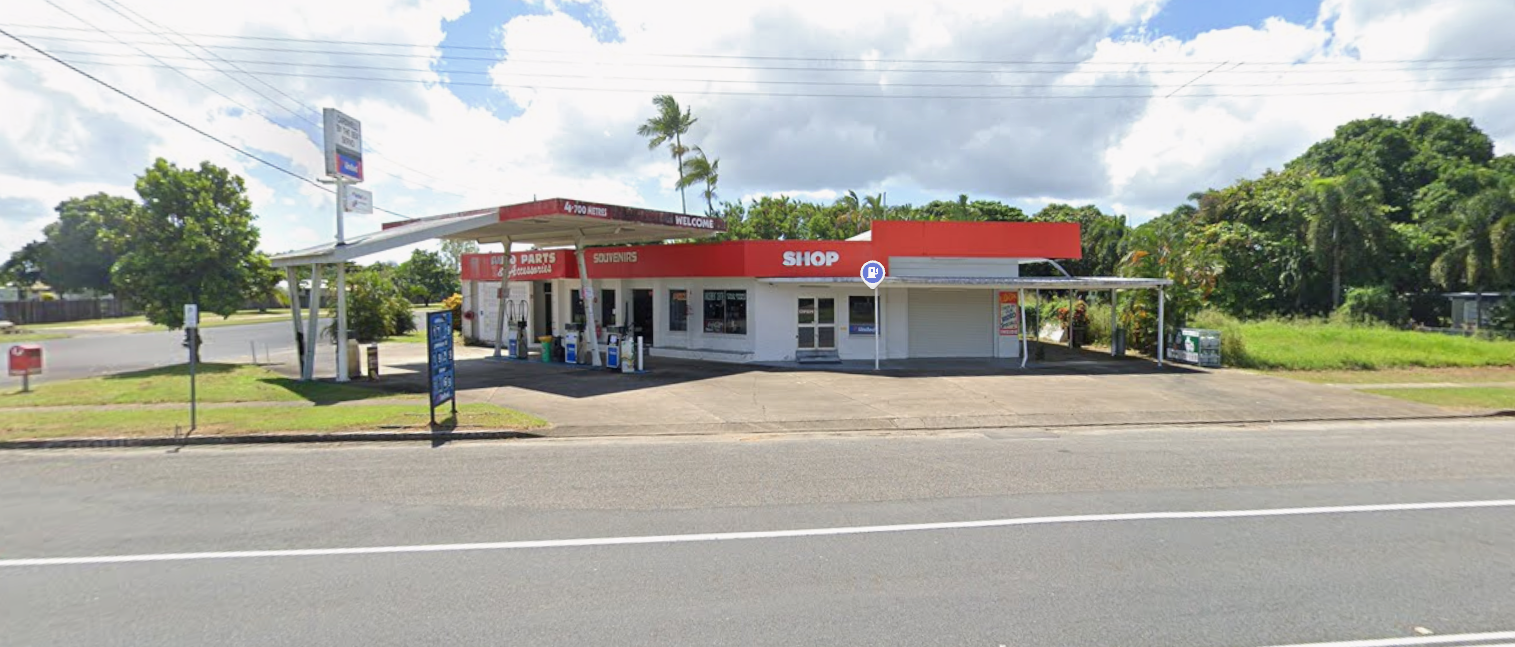
User-supplied historical old-station photograph
ORIGINAL / HISTORICAL SOURCE — SEE CAPTION Source stage and limitation must be checked. Historic fuel or site material does not establish current condition, clearance, approval or tank depth.
 Open full-size illustration
User-supplied historical old-station photograph
Source stage and limitation must be checked. Historic fuel or site material does not establish current condition, clearance, approval or tank depth.
This visual is draft case-study teaching material. Reading it is not an inspection, a measurement or evidence of performance.
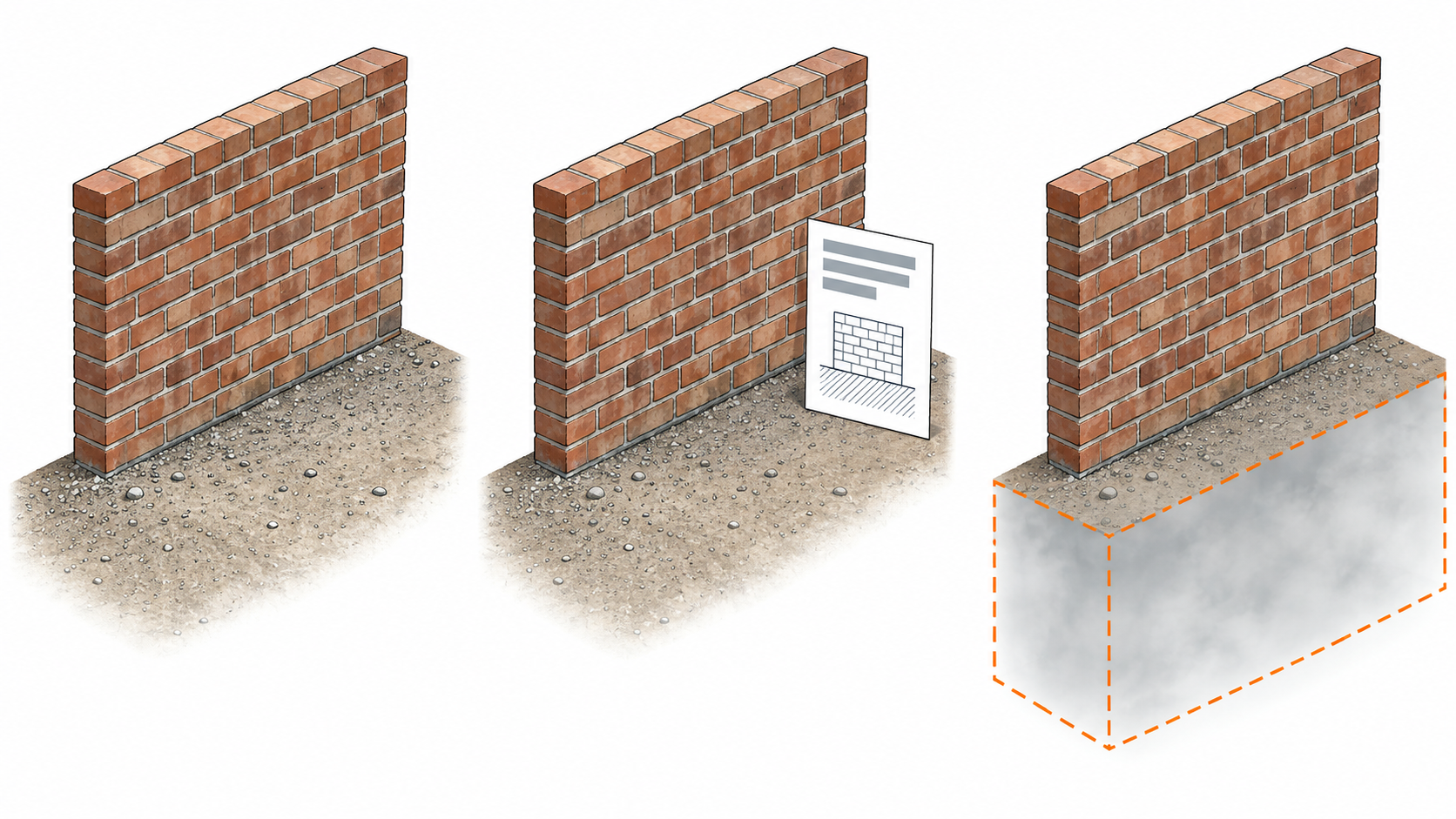
Observation and what remains hidden
LEARNING AID A generic learning aid explains a principle. It does not establish a project fact, hidden condition, capacity, approval or work release.
 Open full-size illustration
Left: record what the wall and ground surface show. Centre: compare that observation with an identified project record. Right: the blank, bounded zone represents what remains concealed or unverified—not an empty excavation or a known foundation.
A generic learning aid explains a principle. It does not establish a project fact, hidden condition, capacity, approval or work release.
This visual is draft case-study teaching material. Reading it is not an inspection, a measurement or evidence of performance.
Prerequisites for the next activity
A pre-commencement check should identify the activity and stage being released. Its prerequisites may include current technical information, service arrangements, hazardous-material work, protective works, access, competent people, suitable plant, required permits and emergency provisions. Their relevance depends on the activity. A single project-start signature cannot establish every later stage.
For each prerequisite, distinguish planned, provided, checked and released. A barrier ordered from a supplier is planned. A barrier on site is provided. A barrier inspected for its required location and function is checked. Release of the dependent activity requires the relevant authorised decision with outstanding conditions understood. These labels prevent intended work being mistaken for completed control.
A demolition stage may rely on a protected pedestrian route. The check should establish that the actual route is available and matches the current arrangement. It should also establish that conflicting movements are controlled and that affected people know how to use the route. A signed traffic-plan cover page cannot answer those physical questions.
The record should identify unresolved items explicitly. Not applicable needs a reason where the item could reasonably affect the work. Pending should remain pending until evidence resolves it. Where a prerequisite is missing, hold the dependent work rather than writing a condition that nobody is assigned to meet. This approach supports clear decisions without pretending that a checklist itself grants technical or regulatory authority.
Interpreting a control record
A control record for a material-transfer area needs to identify the activity, location, revision and intended use. These details establish whether the document applies to the work. Its supporting information and unresolved assumptions are equally important: changing a heading does not make an unrelated record applicable.
A hazard entry must explain the route to harm. Terms such as plant or debris identify a subject but not the exposure. The record needs to establish how movement or material could reach workers, visitors, neighbouring property or an environmental receptor. Deliveries and changing work areas can alter those pathways.
The control entry distinguishes measures that are proposed from those already implemented. It identifies how each measure reduces exposure, who establishes and maintains it, and what technical information it depends on. Exclusion distances and load limits require the relevant site-specific basis; they cannot be derived from a generic form.
Verification must address the condition being relied upon. A photograph may establish the location of a sign, but it cannot establish the capacity of a structural support. A signature may record acknowledgement without verifying the assumptions behind the arrangement.
If a delivery blocks the planned route, the review must address the changed movement and exposure. The revised arrangement must be communicated and obsolete instructions withdrawn from use. Traffic arrangements, the demolition work plan, relevant safe work method statements, emergency access and briefings must remain consistent. A permit authorises a defined activity under specified conditions; it does not replace unrelated technical confirmations.
Control function and performance
Control verification asks whether a measure performs its intended role under the relevant conditions. Presence is only part of that question. A dust extractor can be present but ineffective at the generation point. A communication device can be charged but unusable in the actual noise. A drain protection measure can be installed but bypassed by the changed flow path.
The verification method should suit the control. Some checks are visual; others require records, measurements, specialist inspection or testing. The plan should identify the acceptance basis, competent checker and response to failure. Do not invent a numerical acceptance value because a form has an empty box.
Representative conditions matter. An observation before work begins may establish installation but not performance during the activity. Where the assessed arrangement requires operational monitoring, the relevant trained people must observe or measure it without entering the hazardous area. Verification itself must not become an unsafe demonstration.
A record stating 'route inspected against current layout; gate controlled; emergency access unobstructed; damaged section held pending replacement' explains more than 'barrier present'. The detailed record identifies the checks performed and the restriction that remains. Good records need not be verbose, but they should expose the reasoning behind the decision. This lets another supervisor understand what was verified, what was not, and what changes would require the check to be repeated.
Interpreting a control record
A control record for a material-transfer area needs to identify the activity, location, revision and intended use. These details establish whether the document applies to the work. Its supporting information and unresolved assumptions are equally important: changing a heading does not make an unrelated record applicable.
A hazard entry must explain the route to harm. Terms such as plant or debris identify a subject but not the exposure. The record needs to establish how movement or material could reach workers, visitors, neighbouring property or an environmental receptor. Deliveries and changing work areas can alter those pathways.
The control entry distinguishes measures that are proposed from those already implemented. It identifies how each measure reduces exposure, who establishes and maintains it, and what technical information it depends on. Exclusion distances and load limits require the relevant site-specific basis; they cannot be derived from a generic form.
Verification must address the condition being relied upon. A photograph may establish the location of a sign, but it cannot establish the capacity of a structural support. A signature may record acknowledgement without verifying the assumptions behind the arrangement.
If a delivery blocks the planned route, the review must address the changed movement and exposure. The revised arrangement must be communicated and obsolete instructions withdrawn from use. Traffic arrangements, the demolition work plan, relevant safe work method statements, emergency access and briefings must remain consistent. A permit authorises a defined activity under specified conditions; it does not replace unrelated technical confirmations.
Inspection findings and verified closure
An inspection finding needs a response proportionate to its significance. Identify the affected activity, immediate protective action, responsible person, required completion and evidence for closure. If several organisations are involved, make the interface explicit. A finding assigned to everyone is often owned by nobody.
Closing an action means confirming the required result, not merely receiving a message that somebody looked at it. If a damaged control is replaced, the replacement must be checked for its intended function. If a technical uncertainty is resolved, the relevant decision and updated instruction need to reach the work party. The original finding should remain traceable.
Changed weather, structure, services, plant, materials or work sequencing may trigger another inspection. The trigger is a change in the assumptions or conditions, not only the arrival of a scheduled inspection time. A planned weekly check cannot justify ignoring a barrier struck this morning.
Structural capacity, hazardous-material identification and regulated work approvals require the relevant specialist evidence and authority. The supervisor connects those findings to the activity being controlled, retaining the location, evidence, decision and any outstanding restrictions in the inspection record.